From Rural Hardship to a Home, a Car, and Family Stability
I often look back on my life and feel like it reads like an upbeat story about struggle, setbacks, and slowly building something of my own.
I was born in the countryside. When I was young, my parents took my younger sister with them to other places to do business and make a living, while my younger brother and I stayed behind in our rural hometown with my elderly grandfather. Life was hard, and those years shaped me into someone competitive and resilient, but also sensitive.
Starting in middle school, I followed my father around as his business moved from one small town to another. I ended up attending three different middle schools. That period affected me deeply, both academically and emotionally. High school finally brought a little more stability, but it also happened to be the peak of my rebellious phase. I did plenty of immature things that hurt my parents. I skipped class all the time and spent my days in shady internet cafes back when they were far less regulated than they are now. My interest in the internet mostly revolved around games like Fantasy Westward Journey, Audition Online, CS, and Warcraft III: The Frozen Throne. And of course there was 51, which was wildly popular at the time.
Back then, I imagined finding a girl who truly matched my soul and wandering the world together, making a home wherever we landed. But between my unremarkable looks and strict parents, that dream never got very far. Naturally, my grades collapsed too. I entered high school in an advanced class, then later fell all the way to the bottom of my year. Well, not quite last place—second to last, because the student in last place got a zero for not showing up to the exam.
When it came time to choose between arts and sciences in my second year of high school, I picked the liberal arts track without hesitation. The reason was simple: my foundation in physics and chemistry was basically below zero, and I had never been good with numbers. By senior year, my father had almost lost hope in me. He sat down to talk with me, and for the first time in my life I saw him cry. That moment shook me.
You can probably guess what happened next: I finally decided to work hard.
And sure enough, after all that effort, I failed the college entrance exam.
So I repeated a year, took the exam again, and managed to get into a modest undergraduate program. I hadn’t even been admitted into the major I wanted, which was computer science. Instead, I was reassigned to sociology. At the time I had never even heard of sociology and had to spend quite a while looking it up online.
In September 2010, I started university and felt like a horse finally let loose. Since I thought my major wasn’t ideal, my grades weren’t strong, and changing majors seemed hopeless, I changed course in a different way. In short, I didn’t spend much time doing anything that could be called conventional.
As soon as I arrived, I became class monitor and joined the student union, eventually working my way up to department head and then chair. In my sophomore year, I led several classmates in innovation projects and entrepreneurial practice. I took part in Google Cup’s public welfare practice program and made it into the national top 100. I also joined the Ministry of Education’s college student innovation and entrepreneurship practice program, and our project became one of the few outstanding completion projects in the province.
Later, with support from the school and a charity initiative connected to the Dayi Group foundation, we opened a "Dayi Charity Tea Room" on campus, covering several hundred square meters. That was a real project brought to life, not just something that existed on paper. Even now, it still serves as a place where younger students at my alma mater can learn and practice entrepreneurship.
I graduated in July 2014 and started working. My salary was basically enough to cover my expenses, no more. I had no real ability to think about buying a home or a car—though to be honest, of course I thought about it. I just had no money. During that period, I spent my days working in a development zone, then after work I’d head into town with colleagues for mutton rice noodles, and at night there would be barbecue and beer. Looking back, I was living pretty carelessly, but there was also a kind of freedom in it.
In May 2015, my parents used the 100,000 yuan they had saved over half a lifetime to help me pay the down payment on an off-plan apartment. It would be delivered two years later. After the housing fund deduction, I only had to make up less than 1,000 yuan a month myself because my provident fund contribution wasn’t very high at the time. That purchase happened just as housing prices were rising sharply, so timing-wise, it was fortunate.
At the beginning of 2017, the apartment was finally handed over, and I immediately started the renovation. By October, I had moved in. That became the first home I had ever truly owned, and also the first for my wider family. It began with my parents’ life savings and was built further through the hard work my wife and I put in together from scratch. When something comes from your own effort, it carries a different kind of meaning.
In January 2016, I bought the first car in the family with a down payment: a black Volkswagen Lavida, with a 1.6-liter naturally aspirated engine, automatic transmission, and sunroof. Just like that, I had joined the ranks of people who had both a home and a car. I used to joke with my wife that when I was a child, I often dreamed that I would grow up and drive a black Volkswagen one day. I never expected that dream to come true.
That car stayed with me for four years and ran more than 82,000 kilometers. Apart from two tire blowouts near the end and one bulb replacement, it never gave me any trouble. It truly was an old companion.
In July 2017, my wife and I got engaged. By patching together the money for the engagement gifts and everything else, we also managed to pay the down payment on a second home. At the time, housing prices were still surging, and in that kind of market people usually rush in when prices rise rather than when they fall. Looking back now, if I had known we would later have to sell it at a loss, I probably would not have bought it.
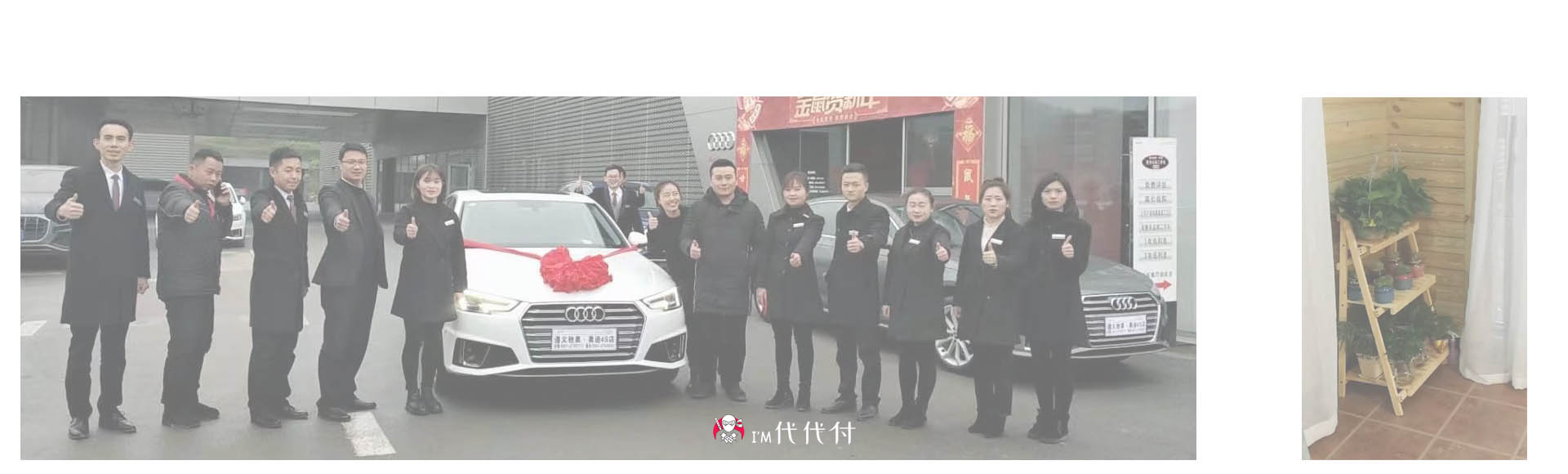
In January 2020, I replaced the old car that had been with me for four years and took out a loan to buy an A4L. Once the trade-in process was complete, I handed the key to the used-car dealer and watched the old car leave. My wife said, "It feels strangely empty. I really can’t bear to part with it. I want to cry."
In October 2021, following the province’s strategy of strengthening the capital city, I moved to Guiyang with plans to develop there long-term, while also considering our child Dongdong’s schooling. We painfully sold my wife’s apartment at a loss and, despite the pressure, bought a Longfor Lanjing home. The developer originally planned to deliver it in April 2022, then later said it would be handed over early in December, and then in early January pushed it back again to after the Spring Festival.
I still hope it will be delivered soon so we can renovate quickly and move in as early as possible, so Dongdong can start kindergarten smoothly. Once my wife is transferred to Guiyang too and the whole family is finally living together neatly under one roof, that will feel close to complete.
After all these years, the road here really has not been easy. A few lessons have become especially real to me.
A peaceful family comes first
When a family gets along and works toward the same future, life tends to improve little by little. A good life is built through effort, and that kind of effort is easier to sustain when everyone is moving in the same direction.
Marriage works best when both people truly pull together
Trust matters. Saving matters. Most families do not build stability all at once; they build it gradually, from very little to a little more. A husband needs to shoulder more when necessary, and a wife needs to be understanding too. Forget tricks and calculations—sincerity is what allows a family to go the distance.
Don’t wait until you have saved every last cent before buying major necessities
In many cases, the speed at which you save cannot keep up with inflation and rising prices. As long as it stays within a manageable range—not reckless spending, not blind overconsumption—it can make sense to combine savings with loans to buy important big-ticket items. The pressure may make life tight for a while, but if it is truly affordable, you can get through that phase.
Spend with restraint and save whenever possible
Avoid getting used to spending tomorrow’s money today. Debt can snowball quickly. Unless your income growth is stable or your expected future income is reliable enough to cover it, don’t be overly confident about carrying too much financial pressure.