Entropy, Death, and the Search for Meaning in Ordinary Life
A few days ago, while mindlessly scrolling through short videos, I came across a word that felt both unfamiliar and strangely heavy: entropy.
In physics, entropy describes the tendency of a system to become more disordered over time. Put simply: no matter how hard we try, the world keeps drifting toward mess, decay, dispersion, and breakdown.
The example in the video was simple:
Why does an empty house fall into disrepair so quickly?
If no one lives there, dust settles, objects gradually become scattered, moisture eats away at the walls, and over time the whole place starts to look worn down. But if people live inside, they clean, organize, repair, and maintain it. The house stays livable because someone is constantly pushing back against disorder.
Time is like a huge invisible hand, nudging everything toward chaos.
Maybe that is what people mean when they talk about a place having a certain human warmth or liveliness. It even reminds me of those newly renovated apartments people do not move into right away, and instead rent out first so someone else can "absorb the formaldehyde" for them.
One comment hit much harder than the video itself
Then I looked at the comments, and one sentence landed with surprising force.
After watching this, I felt awful again. I used to think about this a lot when I was little: I am alive now, and my brain can record everything. But once I die, my thoughts will disappear completely, and there will never be a me again. Whenever I think about that, it makes me feel terrible.
That comment pulled me straight back into childhood, as if an old memory I had buried suddenly woke up.
The first time I realized I was going to die
When I was very young, I remember seriously thinking for the first time: one day I will die.
I tried to imagine what my own death would be like, and then I imagined the world after it.
What frightened me most was not pain, but disappearance. I felt that after death, my consciousness would vanish. Everything I had learned, every skill, every thought—gone. What upset me was the idea of losing myself completely, of being erased forever.
Whenever that fear became too much, I would end up crying and throwing myself into my mother’s arms, as if holding on to her could also hold on to some small piece of certainty, some proof that the world would not entirely come apart.
Later I found out this fear was never just mine
Years later, I brought this up in a group chat, only to find that a friend had thought about the exact same thing as a child.
That realization mattered more than I expected.
It meant this was not some private defect, not an overreaction, not me being unusually broken. It was a silent battle many people had already fought in their own hearts.
Growing up does not make the questions disappear
Even now, these thoughts still return from time to time:
- Why are we alive?
- What is the meaning of life?
- Will everything we do eventually return to zero?
After all, we bring nothing with us when we are born, and we take nothing with us when we die.
Effort, achievement, money, relationships—one day, all of them have to be let go.
I once said to my friend:
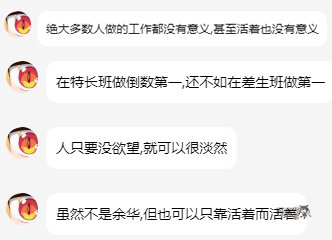
Strictly speaking, neither work nor life has any inherent meaning. But if we do things that make us happy, or things that feel worthwhile to us, maybe that is enough.
Maybe that is also why so many people throughout history wanted so badly to be remembered.
Not just out of vanity, but out of resistance—against entropy, and against forgetting.
Some people long for immortality. Some simply want their names to remain. But at the core of both desires is the same impulse: not wanting the self to disappear completely.
Why that struggle still matters
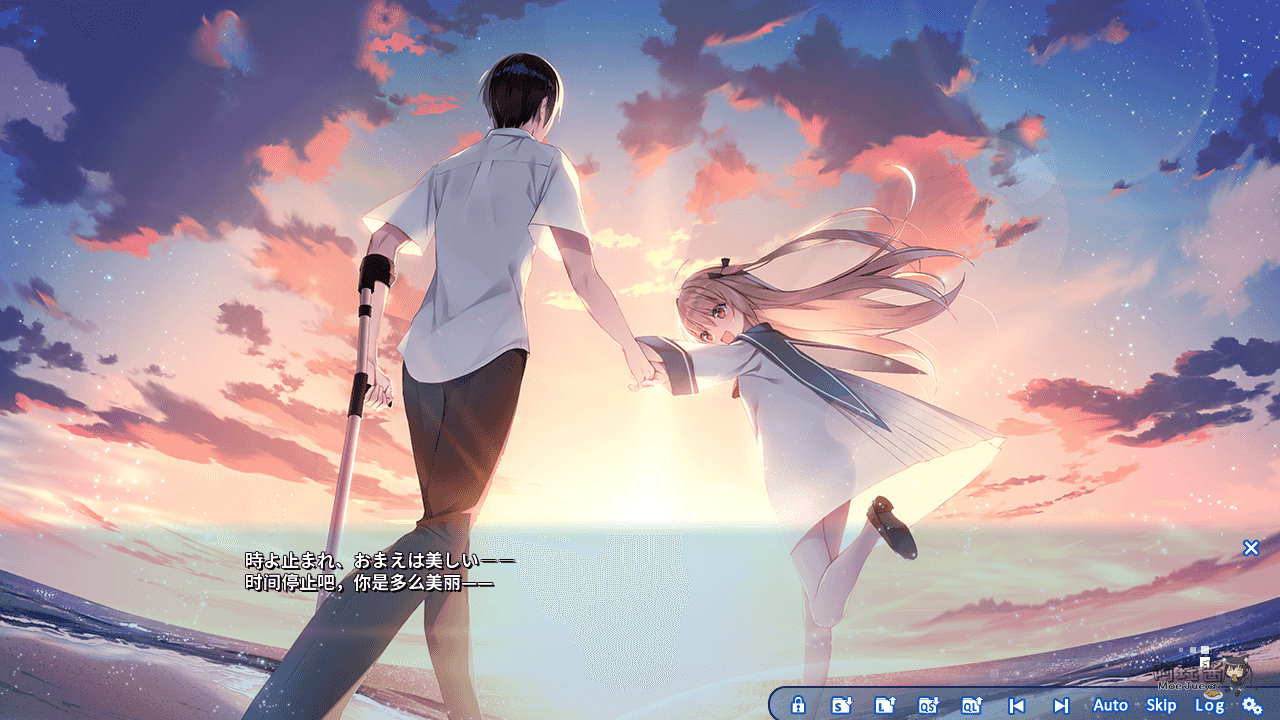
There is a line from ATRI: My Dear Moments that stayed with me:
“If we give up struggling just because death is inevitable, then human life would have no meaning at all.”
If it were really possible to preserve a person’s memories, thoughts, and emotions forever—to make sure they would not be lost, forgotten, or dissolved into chaos—that would be such a gentle thing.
But the real world offers no permanent archive.
All we can do is watch time age everything, loosen everything, and carry everything farther away.

And even if there is another life, what then?
Suppose there really is a next life.
If, before entering it, you drink the soup that wipes away memory—if you forget who you were, forget the people you loved, forget everything that ever made you cry, laugh, ache, or feel alive—then what exactly survives?
In that sense, a rebirth without memory is not so different from another kind of death.
It brings to mind Plastic Memories, and the fear of becoming someone who no longer remembers themselves or the people they once cherished.
Maybe life was never about defeating the ending
We cannot stop entropy. We cannot block the movement of time.
But while everything is moving toward disorder, we can still choose, again and again, to make small acts of order:
- tidy a room
- repair a relationship
- write something down
- hold the person you love
- light up some small part of yourself
These things are tiny. They are almost powerless. They cannot reverse the direction of the universe.
And yet, in the moment we do them, they make it real that I was here.
Maybe that is where meaning lives.
In a world ruled by entropy, we still choose to create our own little forms of order.
Even if everything ends in dispersal, the process is still worth it.