July 2024 Notes: Dublin, Irish History, Cao Cao, and Ending the Month With COVID
July, in no particular order.
Dublin, Ireland
After Liverpool, the next stop was Dublin. Coming out of the airport, I saw rainbow flags hanging all over the different passageways, which gave me a brief moment of confusion. Ireland only legalized abortion up to 12 weeks by referendum in 2018; that is not exactly the profile of a place I instinctively associate with rapid social liberalization. But over the past two decades Ireland really has moved aggressively to attract foreign investment. A lot of American tech companies have offices there, and its immigration policy is relatively friendly. A couple of years ago, when all those emigration-focused groups were active online, Ireland came up again and again as a destination.
Once I got to Dublin, I spent my days just wandering around the city center. There are Catholic churches everywhere. I used to think the conflict between Ireland and Britain was basically just Britain wanting to keep being Greater and Greater Britain, so emotionally I tended to sympathize with Irish independence by default. Then I went down a Wikipedia rabbit hole—"read a hundred articles" level, metaphorically speaking—and realized how many other factors were mixed into it.
The people who wanted Ireland to stay aligned with Britain were mainly Protestants, who feared that if Ireland split off, Catholics would take back political dominance. The Irish Civil War was not a religious war, but the religious identities of the two sides were still very clear: native independence forces were mainly Catholic, and the pro-British side mainly Protestant. Once you put that together with the fact that the Irish government only legalized divorce in the 1990s, and that married women were not allowed to work for the government until 1973... well. It does explain something about how conservative the place used to be.
While I was at it, I also crammed a little prehistoric Ireland-and-England history from Wikipedia:
- Around 16000 BC, Ireland and Great Britain were connected by an ice bridge...
- Around 14000 BC, most of that ice bridge had melted, and only Northern Ireland and Scotland were still connected.
- Around 12000 BC, Ireland and Great Britain were completely separated.
- Around 6000 BC, Great Britain and continental Europe split apart too....
Honestly, it sounds like a very sad story.
Run: a shared obsession across the developing world
One of the most interesting things about traveling is the way places you have been before suddenly connect themselves. In Ireland, for example, I saw a Brazilian restaurant selling sushi. If I had not been to Brazil, and if I did not know Brazil has the largest Japanese diaspora outside Japan, I might not have immediately understood the chain of associations behind that.
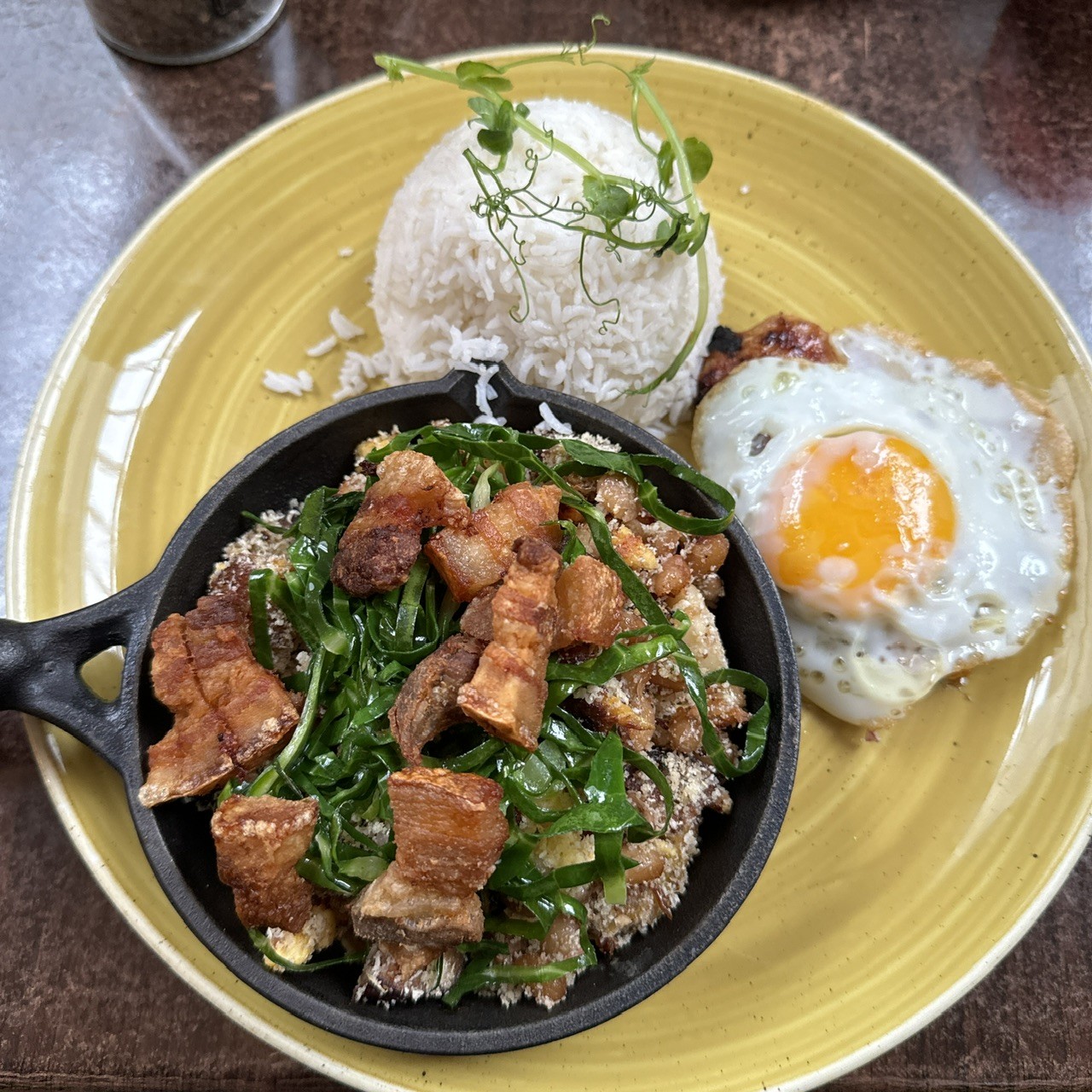
People of Brazilian origin already make up 1.5% of Ireland's population. There is no especially dramatic political or historical reason for that. In a way, it resembles why some Chinese people have also treated Ireland as a realistic migration target: it is an English-speaking country—or more precisely, English is Ireland's second official language—so you do not need to spend enormous effort learning a completely new foreign language. Tuition is cheaper than in the UK, and immigration policy is relatively friendly. For people in developing countries trying to find a viable way out, it is a destination with a pretty decent cost-performance ratio.
And it is not just Brazilians. There are also plenty of immigrants from other South American countries, and there is a fairly sizable Spanish-speaking community.
When artists collapse in your mind
In July I rewatched the 1994 Romance of the Three Kingdoms adaptation, and it reminded me of something I had written before about the way artistic admiration and moral disappointment collide.
The earliest "creator collapse" I ever experienced was probably Cao Cao. In middle school, we studied his poetry in textbooks, and I remember thinking: this is unbelievably good. Teachers would also say that later portrayals reducing him to nothing but a treacherous villain were historically unfair.
Then came the collapse moment: learning that when he took Xuzhou, he massacred the city. In a time of war, massive casualties are one thing; a massacre is another. It is especially hard to swallow when the same person wrote lines like: "White bones lie exposed in the wilds; for a thousand li, no rooster crows. Of a hundred people, barely one survives; the thought of it breaks the heart." Well, yes—and some of that devastation had your contribution in it.
Later I read some textual research arguing that the claim about a massacre at Xuzhou may have been garbled in transmission. Historical records on that point are contradictory, and what happened may have been a brutal battle with enormous losses rather than a straightforward massacre. That might have been reassuring, except it immediately ran into other records in Records of the Three Kingdoms mentioning massacres at Pengcheng and similar acts carried out by his forces elsewhere. So perhaps Xuzhou is debatable, but some massacres absolutely were not.
And then it gets worse. In the Book of the Later Han, there is the record of Geng Yan, a subordinate of Liu Xiu, "massacring three hundred cities," which somehow makes even Cao Cao look dim by comparison.
At this point, all magnificent art feels to me like those rare moments when something divine briefly possesses the creator's hand. Some people get lucky and are possessed several times. But no matter how many times that happens, the vessel itself can still be a complete bastard.
Another thing that hit me hard was the population collapse around the end of the Han and after:
- National population under Emperor Ling of Han in the late Eastern Han: 55 million — AD 184
- During the Three Kingdoms period: roughly 16–20 million
- Peak population after Western Jin reunification: 22.6 million — AD 282
- Then came the chaos of the Five Barbarians and another round of mass killing; at the low point, the combined north-south population was only about 12+ million
- By the reign of Emperor Wen of Sui, population had recovered to 44 million — AD 598
I genuinely stared at those numbers in a daze.
Wartime population figures are tricky, because many people fled into the mountains, disappeared from tax registers, and therefore vanished from official counts. So I tried to look at figures from relatively stable periods after reunification or consolidation. If you only count registered taxpayers, the Three Kingdoms-era number drops to under 10 million, which is even more horrifying.
"My days are late and my road is long, so I act against reason"
At one point, while trading stories about bizarre original families, I told a married couple I knew that one of my regrets before leaving the country was not paying someone to beat up my father.
My friend's husband, who did not know me that well at the time, tried to offer the usual advice: people should let themselves go, make peace with themselves, violence does not solve anything, and so on.
My reaction was: I am letting myself go. I do not internalize things. But beating him up would make me happy. Also, who says it would not solve anything?
Later it occurred to me that this mindset felt historically familiar. Then I remembered Wu Zixu. He invaded Chu to avenge his family, only to find that King Ping of Chu had already died. So he dug up the king's corpse and whipped it. When his friend Shen Baoxu heard about this, he sent someone to persuade him with what was basically an ancient version of therapeutic moralizing. Wu Zixu replied: "My days are late and my road is long, so I act against reason and against the proper way."
That line really does have a certain emotional range.
Ending the month with COVID
July ended with me catching COVID in Las Vegas.
It was miserable. For now, that is all I feel like saying about it.