How a Personal Blog Directory Grew Into a Small Blogging Community
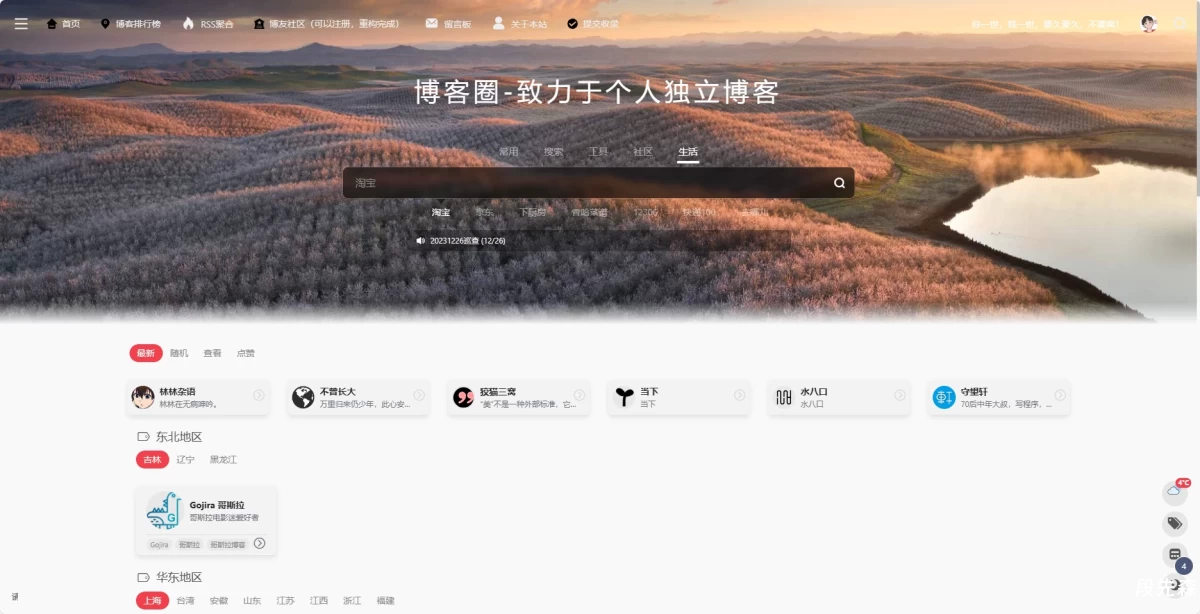
Why this project started
A long time ago, I had a simple idea: collect the blogs I liked in one place so I could check them anytime. That idea stayed in my head for quite a while before I finally acted on it.
What first pushed me in that direction was discovering blogwe. Its interface felt clean and comfortable, and I really admired what its creator had built, even though it had gone a long time without updates. After that, I came across Ten-Year Agreement, which I thought was a great initiative. The idea of treating blogging as a long-term promise is appealing, even if it is hard to know how many people will actually keep going for that long.
Later I found Xiao Zhi’s personal independent blog directory, which collected many excellent personal blogs by year. The page itself was very simple, but it brought together a lot of strong blogs along with useful tools and practical knowledge about building a blog. Then more and more blog aggregation platforms started to appear, including polished projects like GeZhan Shop, among others.
There was also Xiao Hu’s Chinese blogging community WeChat group. Compared with many blog aggregation sites, that group had something extra: real interaction. It was a place for conversation, and through it I got to know many skilled bloggers and learned quite a lot.
Turning the idea into something real
On July 24, 2021, I finally managed to put this idea into practice. I was still a beginner and not the kind of person who could research everything from scratch, but after a long period of trying things out, I found a navigation system that fit my needs well: the OneNav navigation theme built on WordPress.
There has been some debate around that theme and another free, open-source navigation project with the same name, but I never paid much attention to the argument. What mattered to me was whether it worked.
Before moving to WordPress, I had also tried using the Light Navigation series on zblog to collect blogs. That experience did not go smoothly. As a beginner, I did not really know how to ask technical questions, and after a frustrating exchange with the site owner, I decided to switch paths and move over to WordPress instead.
WordPress can be a bit bloated, but for beginners it is still more suitable than most alternatives. The huge range of themes and plugins made it much easier to build what I wanted.
Domain changes along the way
At the beginning, the project used the subdomain dh.duanxiansen.com.
After learning more and thinking it through carefully, I changed it on November 25, 2021 to bokequan.net. That domain matched the idea of “Blog Circle” very well, so it felt like a natural fit. But the site only held onto that domain for a little over a year.
Because of work, daily life, and other interruptions, I failed to renew it after it expired. It was then taken over by a sports-related gambling site. Since the domain had previously been registered for filing purposes, that situation even led to an uncomfortable visit from the police.
At the time I had not settled on a new domain name, so the project was moved back under a subdomain of the main blog: bkq.duanxiansen.com. More recently, I registered bkq.net.cn, which marks a fresh restart.
What the site currently offers
Blog rankings
There is a popularity ranking based on page views, or more specifically, click counts. The rankings are divided into:
- Today
- Yesterday
- This month
- All-time total clicks
Each list displays 50 blogs.
RSS aggregation
The site also provides a simple RSS feed aggregation page that shows bloggers’ latest posts. Some blogs do not appear there because their RSS feeds cannot be fetched properly.
Blogger community
This is essentially a basic Q&A page. Since it has not yet been fully integrated into the site theme, it looks a little out of place for now, but that can be improved in later updates.
Blog detail pages
Each blog detail page pulls in the blogger’s five most recent posts.
Submission and inclusion
There is also a submission feature. After entering a blog URL, the system can fetch other information with one click. If the data cannot be retrieved automatically, it can still be filled in manually. Uploading an icon is optional, since the backend can often obtain it on its own.
Adding the badge to your own blog
If it is convenient and appropriate, you can add the Blog Circle badge to the footer of your blog or place it somewhere else on your site.

Footer code
<a href="https://bokequan.cn/" title="博客圈" target="_blank" > <img src="/images/7b37f335fc4a658d6a4a57bc5492932e4e7572d2f9f30ef0b91a187ef9ed0240.png" alt="本站已加入博客圈" style="width:auto;height:16px;"> </a>