Why I Swapped My Kitchen Outlet for a Switched Socket
During the recent stay-at-home period, daily life at home became very routine: work remotely during the day, and make sure meals were handled.
Lunch usually meant stir-frying something fresh, and dinner was often just reheating food in the microwave.
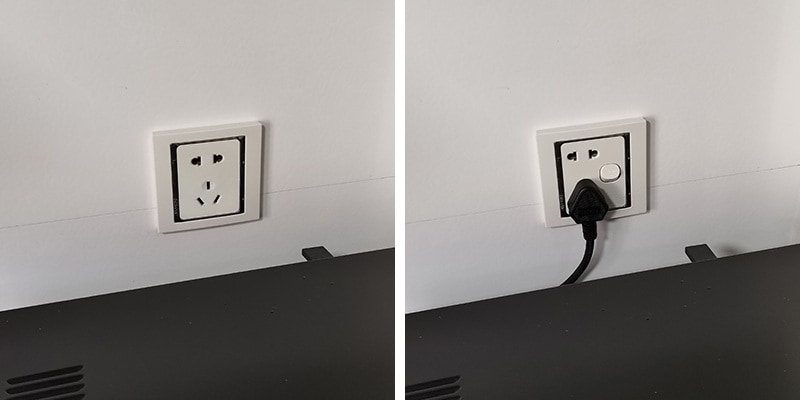
I used to cook mostly on weekends, so the microwave did not get much use. But once it started being used almost every day, one small annoyance became impossible to ignore. I do not like leaving appliances like that plugged in all the time, so I tend to unplug them after each use. The problem was that this was just a standard five-hole outlet, which stays live all the time. Repeatedly plugging and unplugging the microwave started to feel inconvenient, and over time that kind of use can also loosen the outlet.
The obvious fix was to use a switched five-hole outlet instead. That way, I could leave the plug in place and just use the switch to cut power when the appliance was not in use.
So I looked around the house to see what could be rearranged. On the other side of the kitchen there was already a switched outlet installed near the prep and sink area, and I almost never used that one. It seemed like a good candidate to swap with the outlet near the microwave.
For safety, I shut off the power to the house before touching anything. Once I opened the outlets up, the wiring itself was fairly straightforward. These outlets had clearly been installed years ago. On this older switched five-hole outlet, the switch was set up by default to control whether the socket itself was powered. Most newer versions now support two wiring options: the switch can either control the outlet, or it can be wired separately to control a light.
After swapping the two outlets, I checked everything. Both sockets appeared to be working normally, so I cleaned up and considered the job done.
Then, later that afternoon, I noticed something strange. In a small utility space next to the kitchen—where the gas water heater, washing machine, and a few other appliances are located—the outlets had no power at all. Everywhere else in the house was fine.
That was confusing, because I had not touched any of the outlets in that area. The only thing I had done was swap the two kitchen outlets.
Since only one section had lost power, it was pretty clear that something I changed had affected that branch of the circuit.
So I shut the power off again and removed the two outlets I had just worked on. After checking them more carefully, I found that the neutral wire on the outlet next to the microwave had not been tightened properly. It was loose enough that it was almost falling out. I reinserted the neutral wire and tightened it securely.
After turning the power back on, everything worked again. The utility area outlets were live, and the kitchen outlets were also normal.
I still have not fully sorted out the electrical logic in my head. The neutral wire was loose, but it was not completely disconnected, and the outlet itself still seemed to have power and could be used. So why that would affect outlets elsewhere on the same run is something I have not really figured out.
At this point, though, I am not too interested in chasing the theory. Since everything is back to normal, that is good enough.
What this did confirm for me is that switched outlets are genuinely useful in a kitchen. If you are planning kitchen outlet placement, it is worth installing more switched five-hole outlets where possible. They are especially practical for appliances like rice cookers, microwaves, electric kettles, and dishwashers—anything you do not want to keep energized all the time, but also do not want to unplug after every use.
Being able to cut power with a switch makes daily use much easier and avoids constant wear from repeated plugging and unplugging.
Later on, during the 618 shopping period, I bought several Schneider switched five-hole outlets and replaced all the kitchen outlets. The kitchen looked noticeably better right away.